In this fifth edition of the NBSINFRA newsletter, we take stock of what the project has built: not in concrete and soil, but in knowledge, methods, and tools. As the City Labs have moved through co-design and implementation, the wider consortium has been equally at work translating experience into transferable results. This newsletter presents a suite of six info-packs that together capture the scientific and methodological core of NBSINFRA: what the project has developed, how it works, and how it can travel beyond its original five territories.
The info-packs cover a breadth of innovation. The Resilience and Sustainability Quantification Framework (RSQF), led by AUTH, provides urban planners with a structured, data-driven methodology for comparing Nature-Based Solutions under different conditions and extreme weather events, turning green infrastructure from aesthetic aspiration into measurable performance. The Reference Framework Specification for the NBSINFRA Digital Twin, led by RDS with Fraunhofer and CVUT, goes further still: connecting live sensor data and satellite feeds to validated simulation models, so that planners can move from monitoring to prediction and understand how a flooded substation cascades into a hospital outage, or how a green roof performs through a drought.
Complementing these technical frameworks, the NBSINFRA Toolbox and API for NBS Tools, developed by Geodesignhub with UCD, provides the digital interoperability layer that allows different planning software to speak a common language, enabling city planners and residents alike to map green interventions and see their projected impacts before a single seed is sown. The Co-creation Framework for Citizen Participation with NBS, led by University College Dublin with Fingal County Council, the Municipality of Aveiro, and UMINHO, tackles the equally critical human dimension: combining deliberative democracy with geodesign to ensure communities are genuine co-authors of the solutions that shape their neighbourhoods, not simply consulted at the margins.
Two further info-packs address the social dimension of infrastructure protection and the question of what happens after NBSINFRA ends. The Self-learning Toolkit for Community Engagement and NBS Co-creation, led by VilniusTech, brings together web and text mining, video neuroanalytics, and affective computing to bridge social reflexivity with technical infrastructure protection, recognising that resilient infrastructure and empowered communities are not separate objectives but two sides of the same challenge. And the NBSINFRA Replication Roadmap, led by ICONS, provides the structured pathway through which all of these frameworks, tools, and lessons can be adapted and scaled by municipalities, regional authorities, and infrastructure managers across Europe and beyond.
Taken together, these six info-packs do not simply document what NBSINFRA has produced. They constitute an open invitation: to other cities facing flood risk or urban heat; to planners seeking evidence-based methods; to communities wanting a genuine voice in decisions that affect their environment. The knowledge generated across Aveiro, Cologne, Fingal, Prague, and Ruse is ready to travel. These info-packs show how.
NBSINFRA Project Coordinator
|
| |
|
NBSINFRA's knowledge in action: six info-packs for urban resilience
|
| |
 |
|
|
|
How do you measure whether a green roof truly protects a neighbourhood, or whether a restored riverbank will hold during a flood? The RSQF, developed by AUTH, answers this question by providing urban planners with a comprehensive, standardised methodology to assess and compare Nature-Based Solutions under different weather conditions and urban contexts. Tested in Aveiro and Prague, the framework transforms NBS from well-intentioned interventions into quantified, evidence-based infrastructure, giving decision-makers the data they need to justify green investments and optimise their impact. |
|
|
| |
 |
|
|
|
The NBSINFRA Digital Twin Framework, led by RDS with Fraunhofer and CVUT, provides a blueprint for creating digital replicas of urban environments where Nature-Based Solutions are deployed. By connecting live sensor data, satellite feeds, and validated simulation models, it enables planners to move from simply monitoring NBS performance to predicting it, including how a single flood event can cascade across hospitals, substations, and emergency services. Built on EU open standards and FAIR principles, every twin produced is interoperable and reusable across different city contexts. |
|
|
| |
 |
|
|
|
Planning green urban interventions involves navigating a fragmented landscape of software tools that rarely communicate with each other. The NBSINFRA Toolbox and API, developed by Geodesignhub with UCD, solves this by acting as a universal digital bridge, allowing different planning platforms to exchange data using a common language. Through its first implementation, Shadepoint, city planners and residents can draw nature-based solutions directly onto a digital map and immediately see how much they will lower local temperatures, store rainwater, or filter pollutants, turning community-led ideas into professionally graded, construction-ready designs. |
|
|
| |
 |
|
|
|
Nature-Based Solutions work best when the people who live with them help shape them. The Co-creation Framework, led by University College Dublin with Fingal County Council, the Municipality of Aveiro, and UMINHO, combines deliberative democracy with geodesign to bring citizens into the planning process at every stage, from broad visioning to structured negotiation over concrete interventions. Tested at two very different scales, a strategic Local Area Plan in Fingal and neighbourhood-level NBS design in Aveiro, the framework offers local authorities a low-cost, transparent, and adaptable approach to participatory planning that builds trust and lasting community support. |
|
|
| |
 |
|
|
|
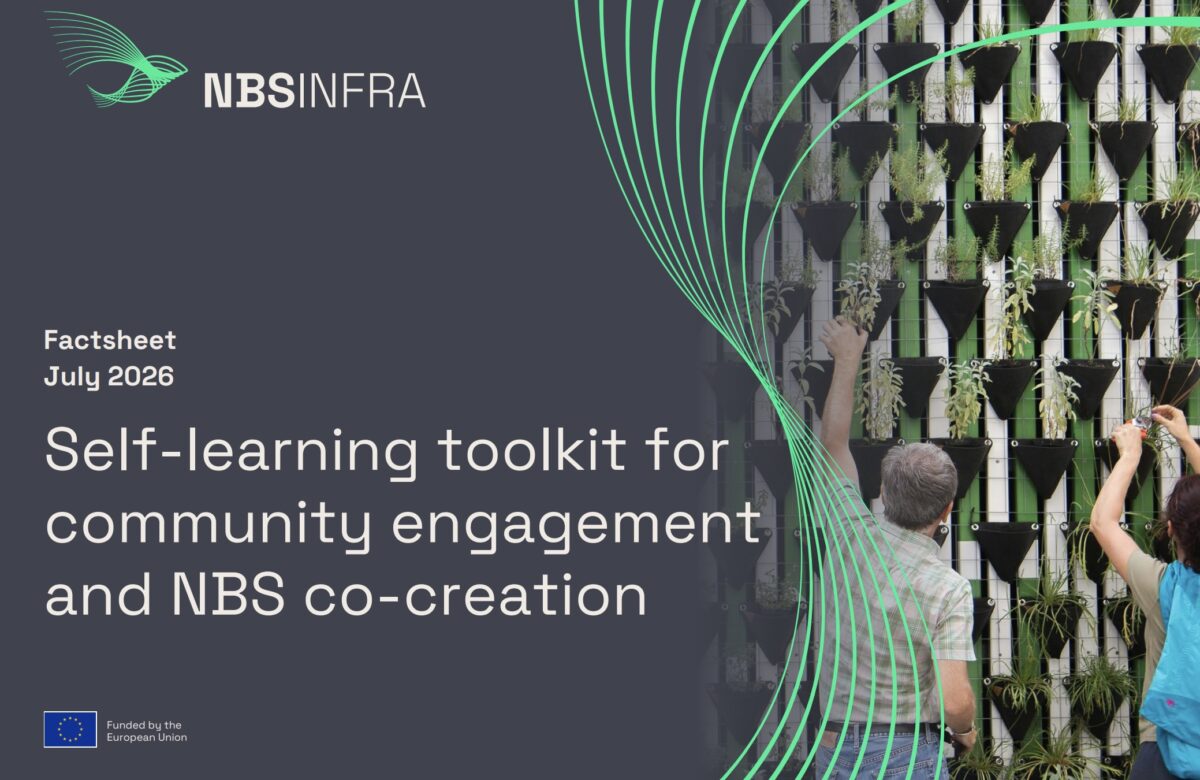
Led by VilniusTech, this toolkit addresses a gap that technical frameworks alone cannot fill: the need to understand and respond to the human, social, and emotional dimensions of NBS implementation. Combining web and text mining, video neuroanalytics, and a Mass-Customised Affective Computing Game Subsystem, it enables real-time analysis of community attitudes and complex threats, supporting fast and reliable decision-making with minimal human intervention. The toolkit recognises that sustainable infrastructure protection through NBS is only effective when the relationship between technical systems and the communities they serve is genuinely understood and addressed. |
|
|
| |
 |
|
|
|
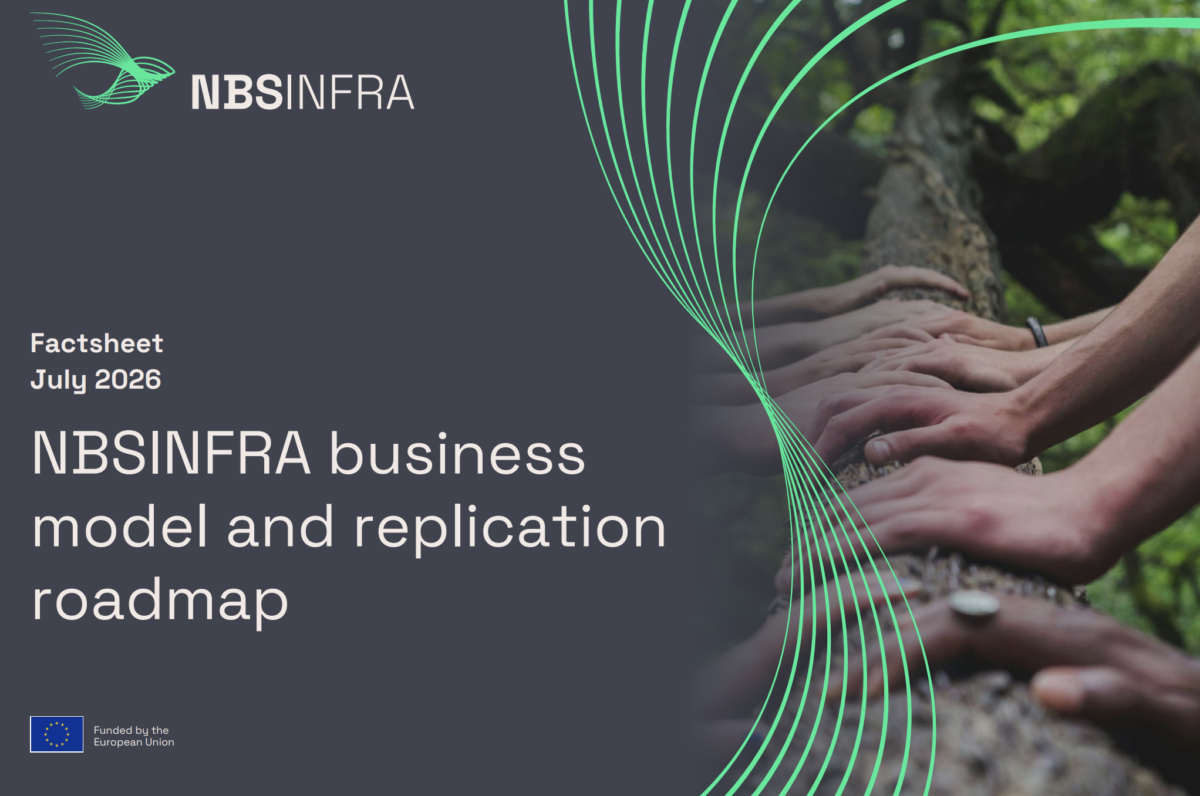
What happens when the project ends? The NBSINFRA Replication Roadmap, led by ICONS, is designed to ensure that the answer is not silence. Building on the experiences and lessons learned across the five City Labs, it provides a structured yet flexible pathway covering the full NBS implementation lifecycle, from initial scoping and stakeholder engagement through to monitoring, adaptation, and scaling. By packaging the project's key methodologies, including the RSQF, the Digital Twin framework, and the co-creation approaches, into transferable guidance, the Roadmap gives municipalities, regional authorities, and infrastructure managers across Europe the tools to adapt and replicate proven NBS approaches in their own territories. |
|
|
| |
|

Funded by the European Union. Views and opinions expressed are however those of the author(s) only and do not necessarily reflect those of the European Union or REA. Neither the European Union nor the granting authority can be held responsible for them. |
| |
|